YouTube Exercises
Partial Relief


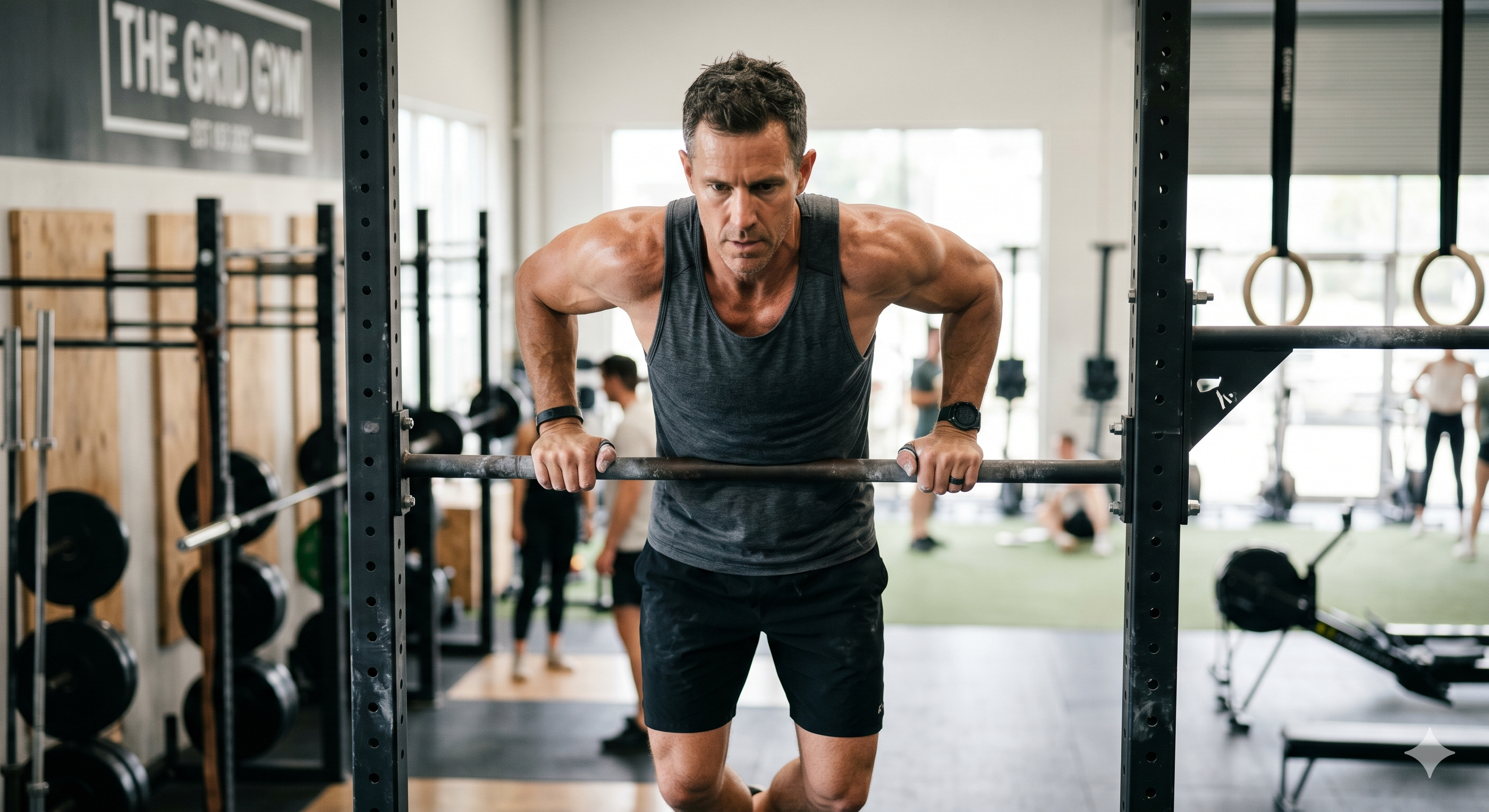
Justin, a 40-year-old athlete, had been struggling with persistent right shoulder pain, which flared up during intensive workouts like muscle-ups. The discomfort began affecting not just his high-level activities but everyday tasks such as reaching behind his back.
Before seeking our help, Justin hadn’t explored any treatments and continued to work around the pain. The objective wasn’t just temporary relief; we aimed to uncover the underlying causes and prevent recurrence. Upon assessment, specific weaknesses and coordination challenges were highlighted.
Over 19 weeks, a combination of manual therapy, neuromuscular reeducation, and personalized home exercises addressed those key issues. Justin has regained full shoulder function and confidence in his movements, now painlessly participating in the activities he enjoys without concern.
People often focus solely on resting the shoulder, not addressing the underlying biomechanical issues.
Ignoring the importance of scapular function and its role in shoulder health is a common oversight.
Starting exercises that are too advanced without building foundational strength can lead to setbacks.
For Justin, continuous high-intensity activities like muscle-ups contributed to his shoulder’s impingement problem. Without enough endurance and strength in the shoulder stabilizers, every overhead movement added stress, gradually leading to pain and dysfunction.
His shoulder blade wasn’t moving correctly, causing more load on the shoulder joint itself, leading to impingement and discomfort with repeated movements.
Justin’s right shoulder presented with weakness, reduced range of motion, and coordination issues, primarily affecting his ability to perform overhead activities.
The deficit in scapular control and stability created undue stress during movements, leading to impingement and chronic pain while performing activities like muscle-ups.
Our approach focused on improving Tyler’s shoulder stability and restoring equilibrium in shoulder motions. By prioritizing neuromuscular reeducation and controlled exposure to movement patterns, we reestablished efficient movement pathways and reinforced shoulder strength.
Justin can now perform muscle-ups and extensive workouts without shoulder pain. Activities that previously caused discomfort, such as reaching behind his back and lifting overhead, are now pain-free. He has resumed his fitness regimen confidently, armed with the knowledge and exercises needed to keep his shoulder robust and injury-free in the future.
©2026 Alinea Performance. All Rights Reserved.