Stress Urinary Incontinence
Leakage triggered by lifting, coughing, sneezing, exercise, or increased abdominal pressure due to weak or uncoordinated pelvic floor muscles.


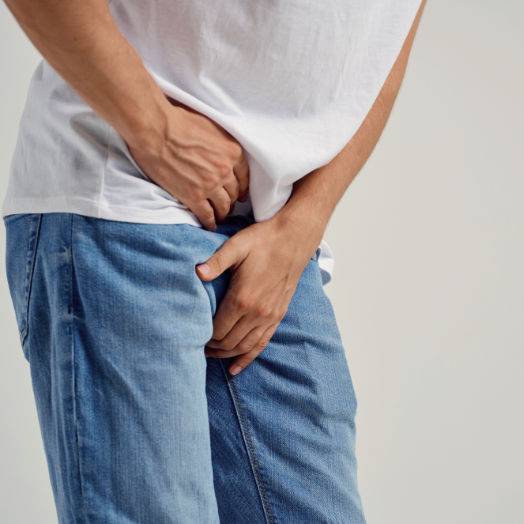
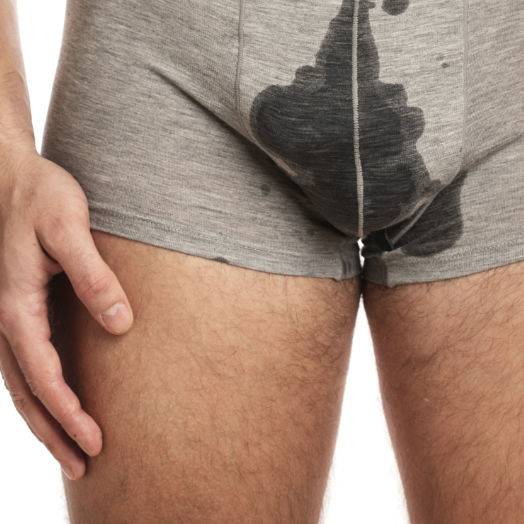
At our Clinics, We Frequently Work With Men Experiencing:
Urinary incontinence occurs when the pelvic floor muscles, core pressure system, and bladder function become uncoordinated or weakened. Left untreated, leakage often becomes unpredictable, affecting workouts, daily life, intimacy, and overall confidence.
The good news: with the right evaluation and strengthening strategy, most men see significant improvements — often faster than expected.
Our comprehensive physical therapy solutions are designed to alleviate your pain, rebuild your strength, and enhance your long-term mobility, ensuring a more resilient and healthy lifestyle.
Learn more about our Physical Therapy services. If your incontinence is related to pelvic pain, visit our CPPS page.
When you choose Alinea Performance to help you become continent, you’ll experience improvement from the very first day. While individual results may vary, your initial appointment will include:
Here’s what we can guarantee you walk away with on the very first day.
Get quick answers to our most frequently asked questions.

Can’t find the answer you’re looking for? Contact Alinea Performance Alinea Performance!
In most cases, no. Most states allows for "Direct Access," meaning you can come directly to a physical therapist for an evaluation and treatment without seeing a doctor first. This gets you on the road to recovery faster. However, if you are using insurance there are some specific plans that do have requirements regarding signatures or referrals. If your insurance has specific requirements, we will let you know before your first visit. (Medicare does NOT require a referral to get started with therapy).
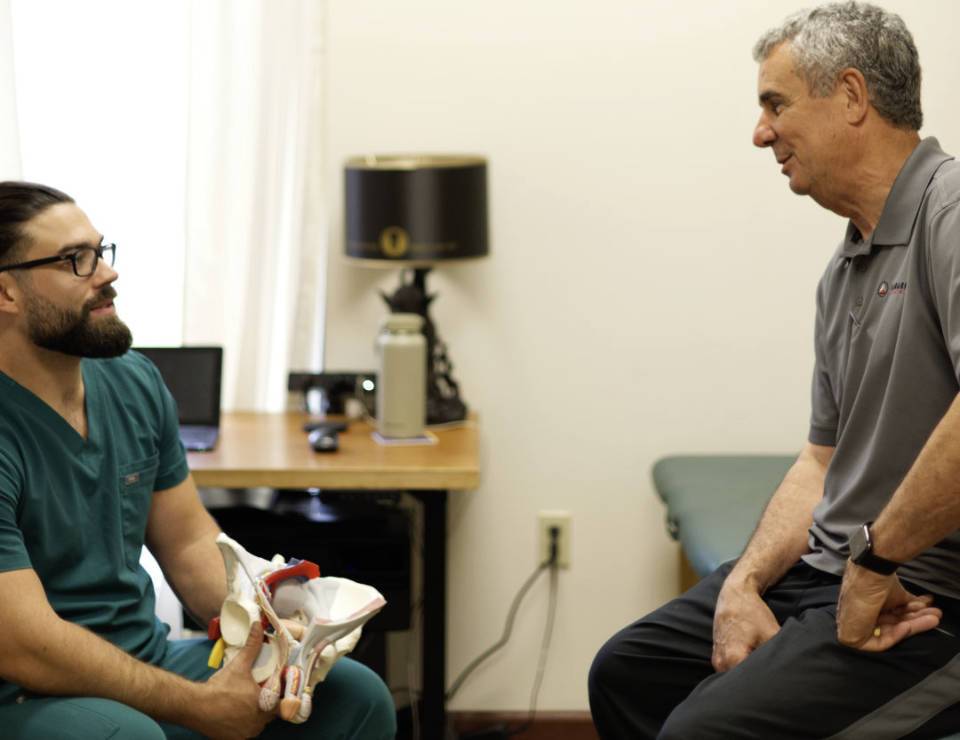
During your first visit, you'll undergo a comprehensive evaluation. We'll discuss your medical history, assess your current condition, and perform a physical examination. This helps us understand your specific needs and goals. Based on this information, we'll develop a personalized treatment plan tailored to your unique situation. You'll also have the opportunity to ask any questions and discuss any concerns you might have about your treatment.
Yes. When appropriate, we use manual therapy techniques like joint mobilization, soft-tissue work, dry needling, and directional loading strategies. These help decrease pain quickly so you can move more easily and progress into strengthening.
In many cases, yes. Most pain improves with the right combination of movement correction, strength training, and hands-on care. We’ll also tell you honestly if imaging or a surgical consult is appropriate.
Yes. One of our main goals is education. You’ll understand exactly what is causing your pain, why it’s happening, and how to fix it. Knowing the root cause reduces fear and speeds up recovery.
If pain limits your workouts, daily activities, sleep, or quality of life—even slightly—PT is the right next step. A short evaluation can determine exactly what’s going on and what your fastest path forward looks like.
Male urinary incontinence can come from pelvic floor muscle weakness, poor coordination, prostate surgery (including prostatectomy), chronic pelvic floor tension, nerve irritation, bladder overactivity, or pressure management problems during lifting, coughing, or daily movement. A pelvic floor physical therapist’s job is to identify your specific driver so treatment can be targeted and effective—not just symptom-based.
Leakage in men is more concerning if it occurs suddenly without warning, worsens quickly after prostate treatment, is accompanied by pelvic or groin pain, numbness, urinary retention, blood in the urine, or significant nighttime symptoms. Even mild leakage is worth evaluating early to prevent worsening and to regain full control.
Staying active is important—but how you move matters. Certain lifting strategies, breathing patterns, or bracing habits can increase pressure on the pelvic floor and worsen leakage. A pelvic floor physical therapist will teach you how to stay active while improving pressure control and pelvic floor coordination.
Yes. Chronic leakage in men often persists because the root issue—muscle weakness, tension, nerve irritation, post-prostatectomy changes, or faulty pressure management—was never fully addressed. Pelvic floor PT corrects these underlying problems so even long-standing incontinence can improve.
Without treatment, leakage in men often worsens, leading to increased urgency, difficulty returning to exercise, social withdrawal, reduced confidence, or persistent issues following prostate surgery. Early treatment helps restore bladder control, pelvic floor strength, and normal function—so you can return to life without worrying about leakage.
Yes. Focused shockwave is safe and commonly used in post-prostatectomy rehab to improve blood flow and accelerate return of sexual function. Pelvic floor therapy is typically paired with shockwave for best results.
Yes. Many men with long-standing ED improve because shockwave targets the underlying issue—blood flow and tissue quality. When paired with pelvic PT, even chronic ED often responds well.
Men with mild to moderate ED, decreased blood flow, performance issues, or post-prostatectomy changes often benefit most. An initial evaluation determines whether shockwave, pelvic PT, or a combination is the right fit for you.
Can’t find the answer you’re looking for? Contact us!
©2026 Alinea Performance. All Rights Reserved.